
Hastings CBD
WestSide
792 artists. 82 countries. 899 positions filled. The Southern Node of a global digital art network has landed on Heretaunga Street West... and 100 positions remain.
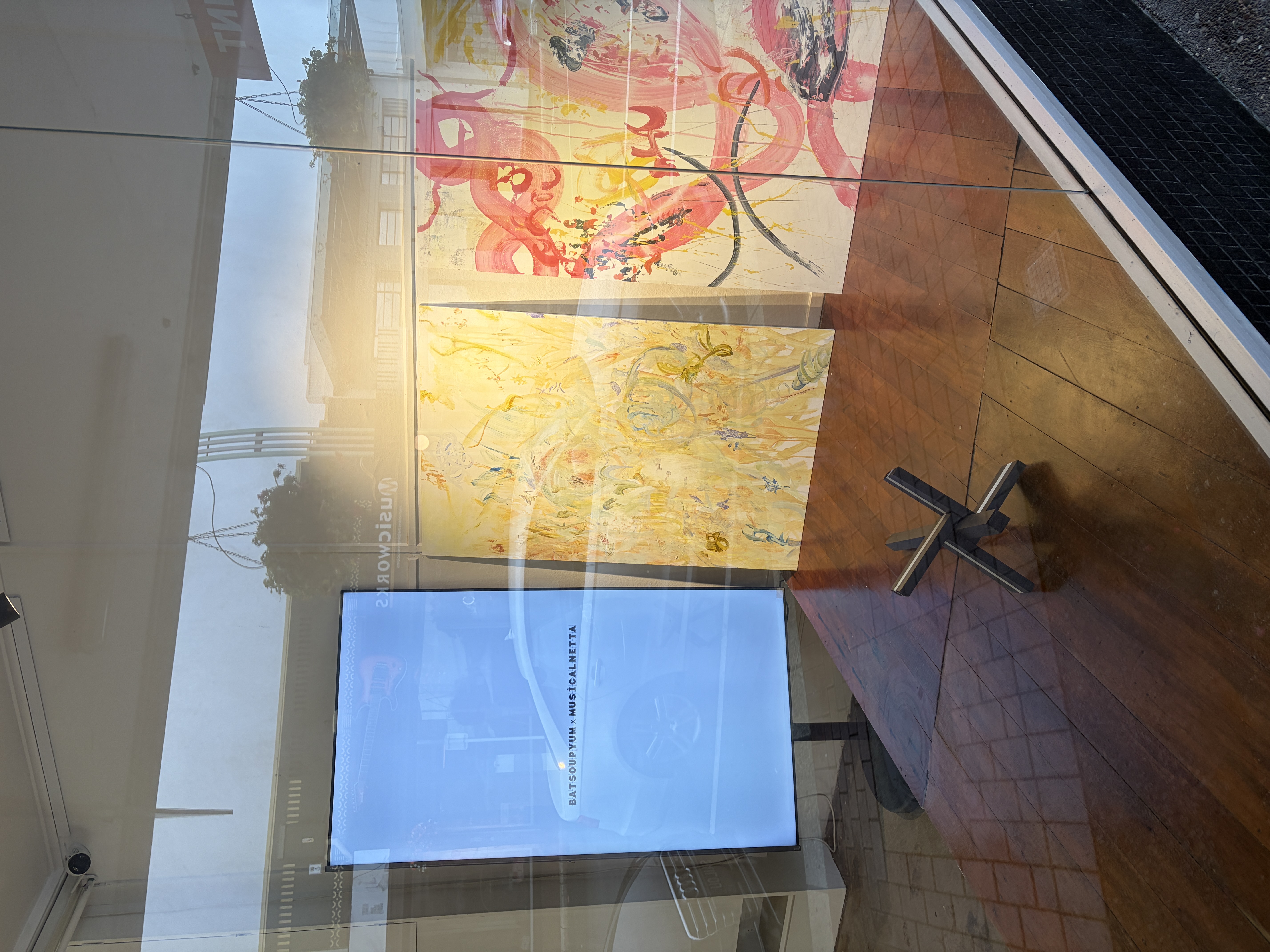
The Southern Node · WestSide · Heretaunga Street West
Most galleries wait for art. The Line did the opposite... started with a thousand positions on the blockchain in October 2022, then waited for the artists to find them.
Now the artists are here. The Southern Node of The Line is on the western end of Heretaunga Street, in a regional New Zealand city most of the world has never heard of. You walk past and see a gallery. It is one. But it is also a physical landing point in the largest ordered archive of digital art history that has ever existed.
In 2021, Balaji Srinivasan published a thesis called The Network State... the idea that the next great societies would form online first, build their culture in the cloud, and only later acquire physical land. Most people read it and moved on. Ryan read it and recognised what The Line was already becoming.
In 2022 the rest of the NFT world was in retreat. JPEG Summer 2021 had passed, the speculators had moved on, and most pop-up galleries had quietly closed. Building during a downturn is harder than building during a boom. It also produces things that last.
The Southern Node IRL landed on the western end of Heretaunga Street... two doors down from a surf shop and a music store. Most people would have started in Auckland, or Wellington, or somewhere with a postcode the international press already recognised. Ryan started in Hastings because he is from Hastings. His family has lived in Hawke's Bay for close to five decades, and has run retail in the Hastings CBD since the 1980s.
"Art is best shown where it's needed most. And art has always been a catalyst for transformation in cities."
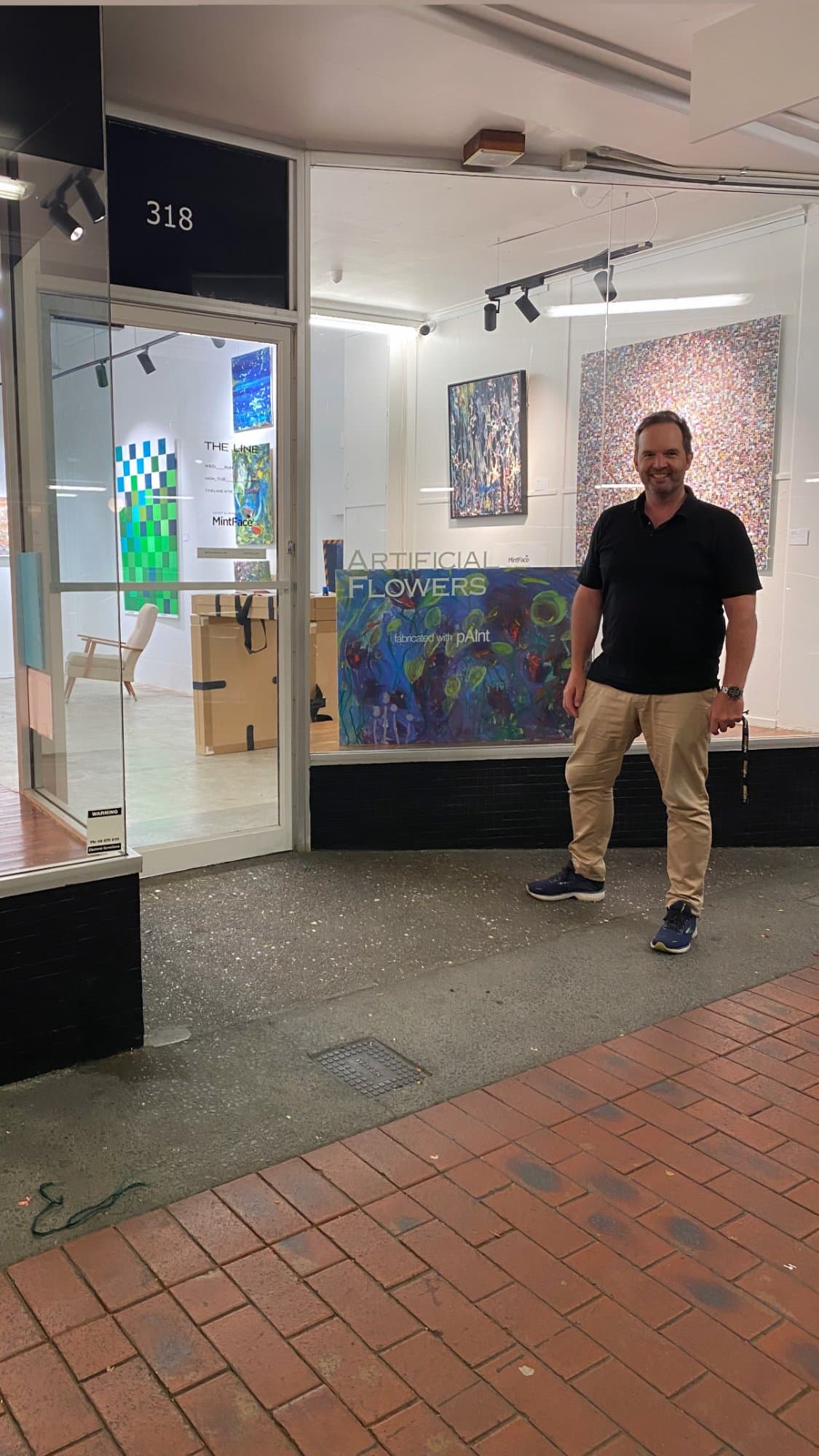
Outside the Southern Node · Heretaunga Street West · Hastings
Cloud first. Land last. The Line lived as code for almost three years before it ever had a wall to hang on. Now the Southern Node is in WestSide, Hastings.
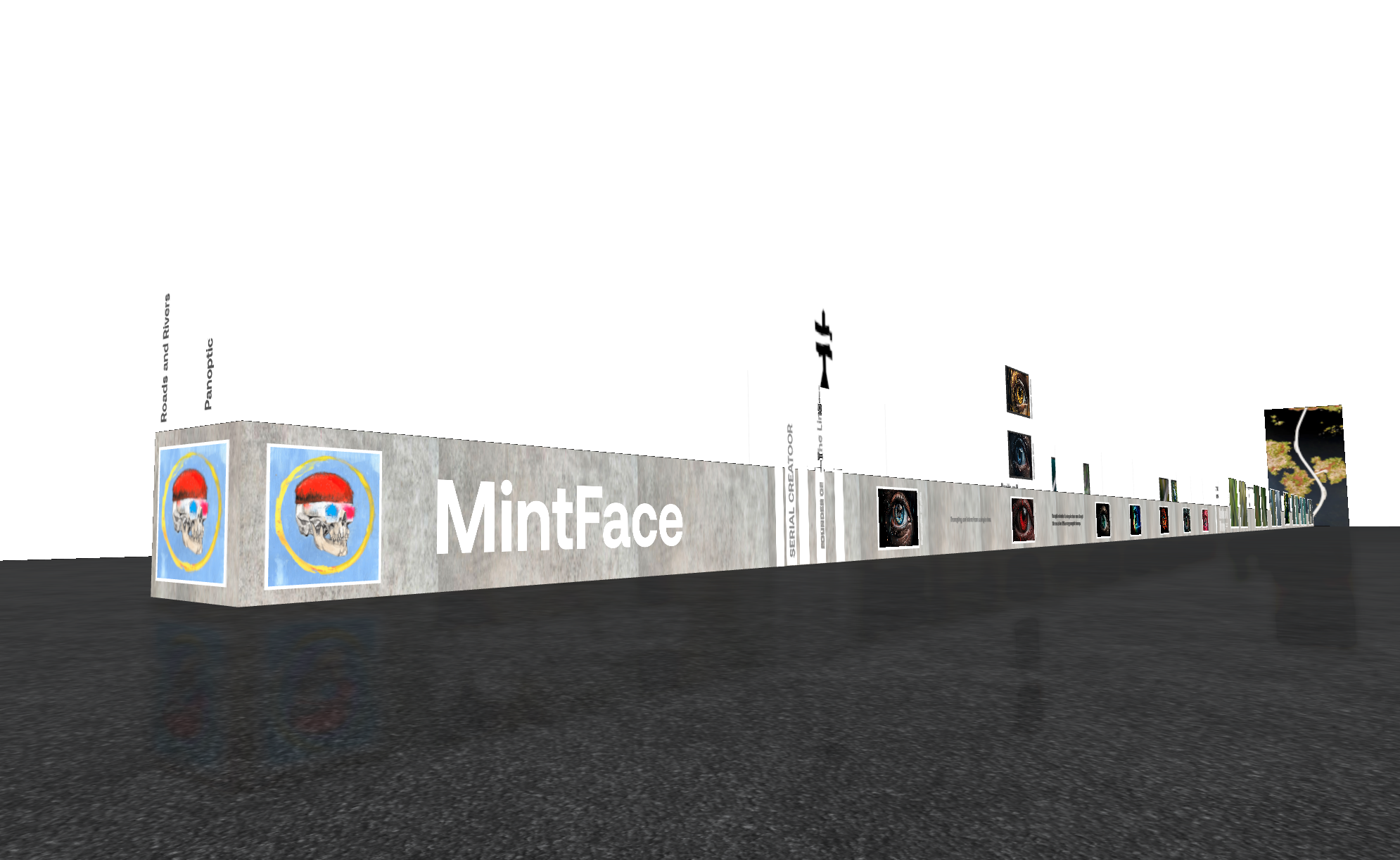
The Line is not a gallery with a website. It is a virtual construct... a permanent, ordered sequence of 1,000 positions written into the blockchain... that happens to have a physical Southern Node in Hastings, New Zealand.
The network exists in the cloud. Artists from 82 countries have claimed positions, placed their work permanently on-chain, and connected themselves to every artist who came before them in the sequence. The Southern Node IRL is where the network touches ground.
Step off the footpath in WestSide and you are inside one of the most technically advanced gallery spaces in the southern hemisphere. The floor is concrete. The walls are white. The art is paint and panel and pigment, the way art has always been. Until you scan the QR code beside any of it.
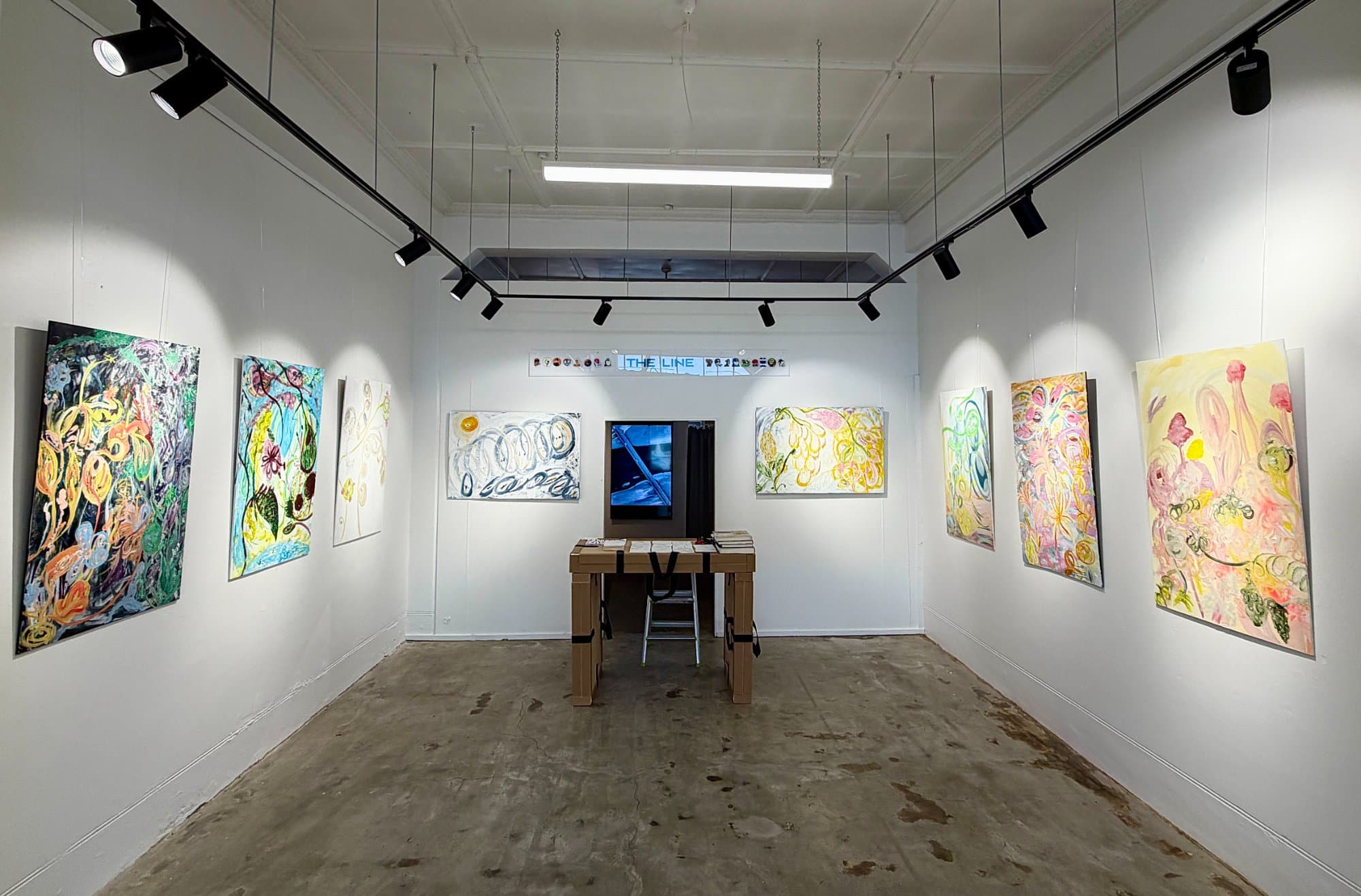
Inside the Southern Node · Original works on display
Then the chain of custody loads. Who minted it. Where it was minted. How many editions exist. Every previous owner since the work was first written into the blockchain. Sixty seconds, end to end, no login, no gatekeeper.
Walk past the front window on Friday and see different work on the walls. The physical collection at the Southern Node rotates. The virtual network never stops growing. What doesn't vary: every piece on display has its full on-chain ownership history available on your phone in thirty seconds.
The Line has 792 artists from 82 countries... and there is a distinctly local thread woven through it. 69% of current members are from the United States. The remaining 31% spans every continent except Antarctica. The list runs long, and the order does not move.
The local who started The Line and never left. A painting practice built around feeling rather than idea... resolved only when a state of stillness appears. The blockchain as legacy infrastructure, recording personal history for future generations.
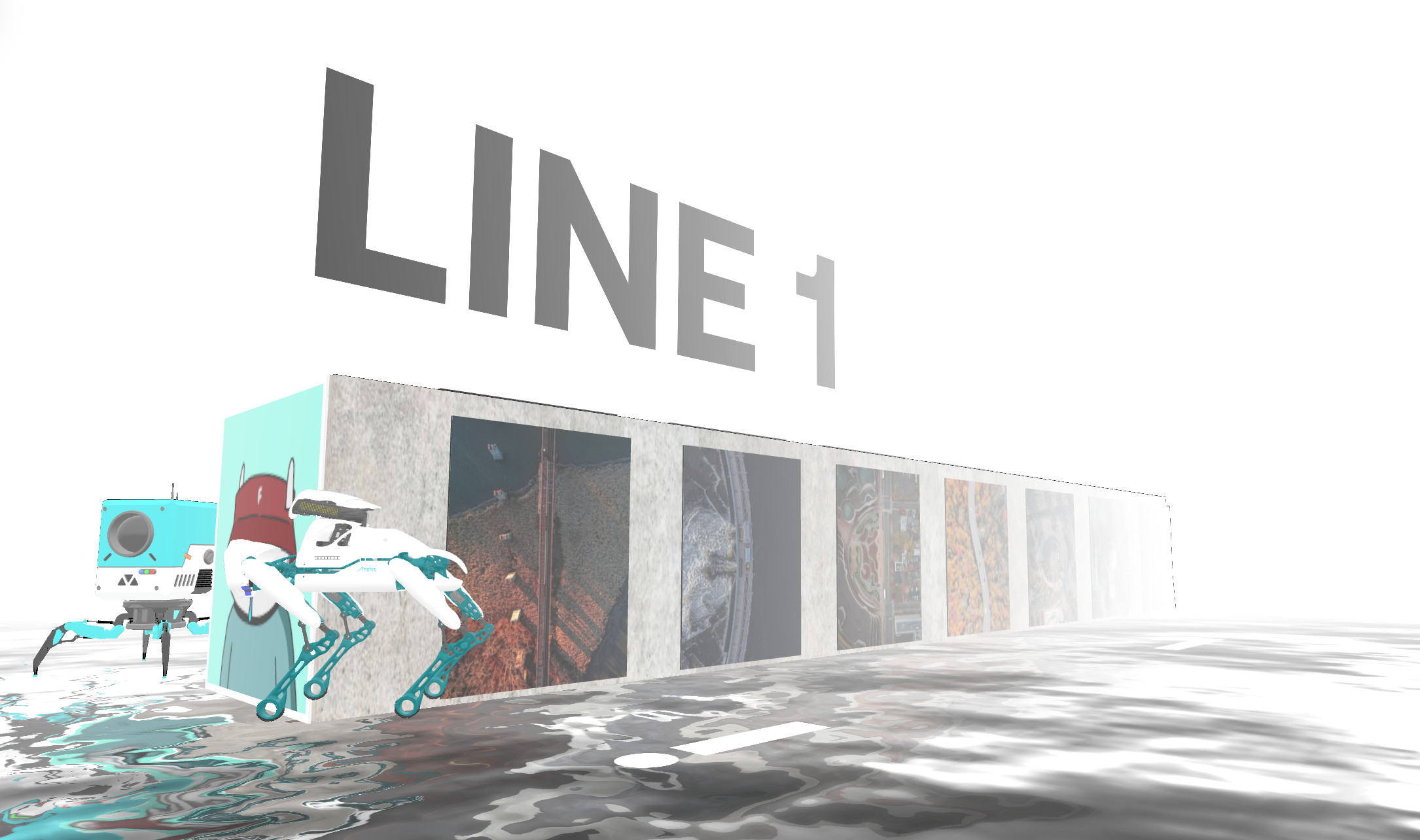
The second artist ever to join The Line. Drone photographer, mechanical engineer, and 3D artist... stunning aerial views blending tech precision with natural beauty from above.
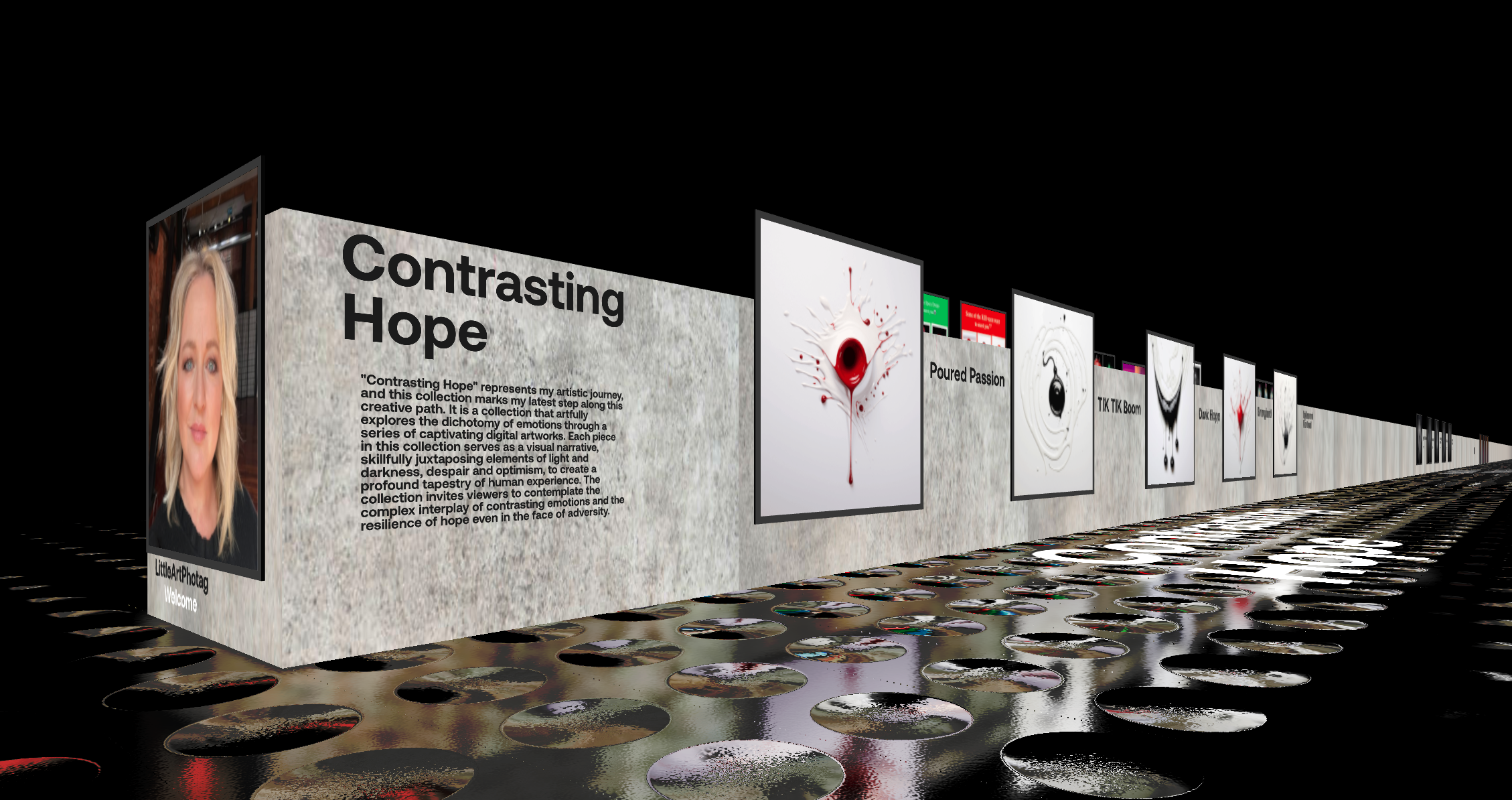
Keri Little, Auckland-based photographer with eighteen years capturing presence and authenticity. Her macro liquid photography explores motion and transformation: drops of pigment and movement frozen in time, translated into curated NFT collections collected internationally.
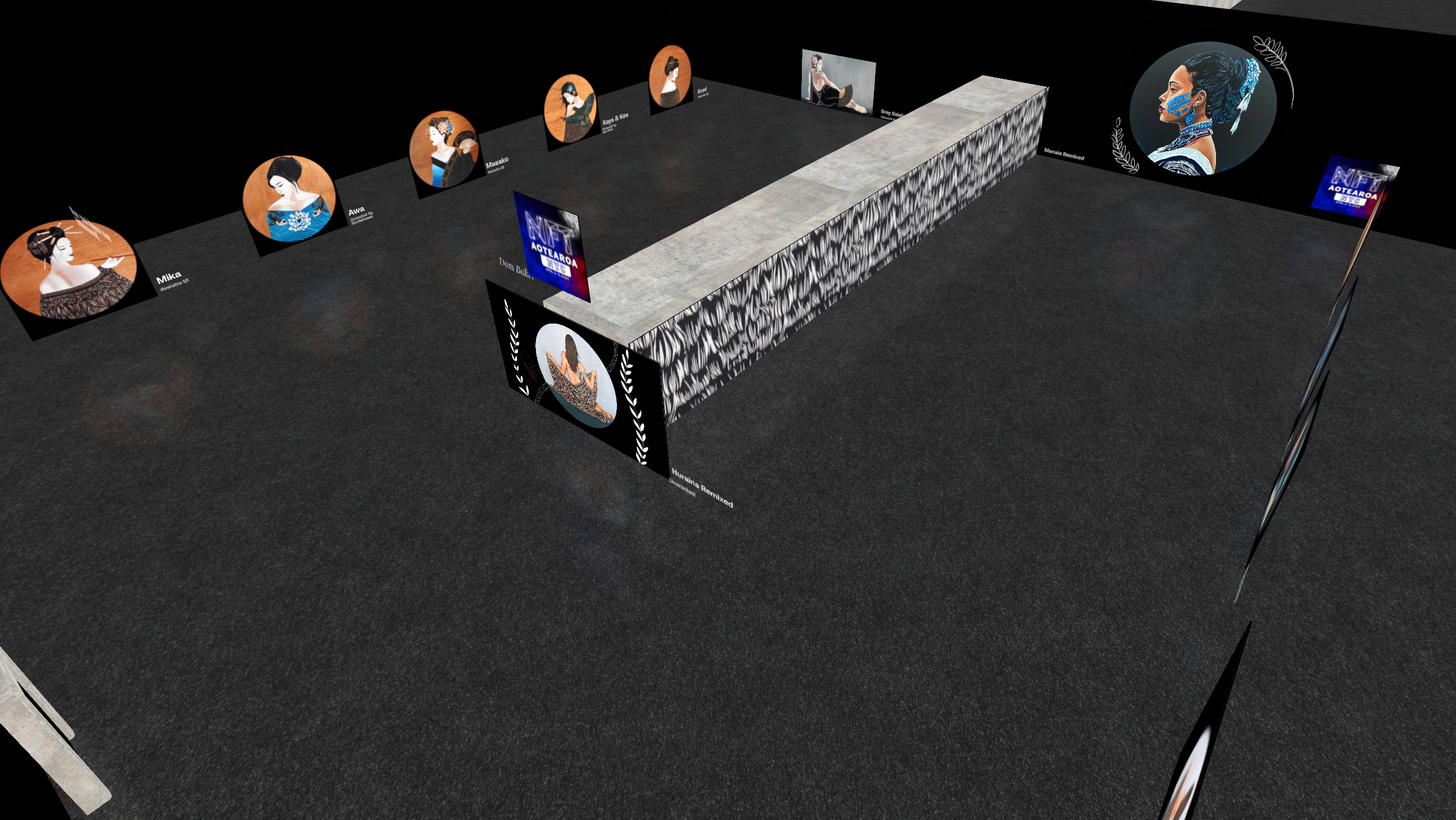
Dominique Baker, Bay of Islands-based, AUT graduate. Figurative painter working in acrylic on wood, exploring whakapapa, identity and beauty. Founder of NFT Aotearoa, which has put New Zealand artists into shows in Miami during Art Basel, New York during NFT NYC, and onto digital billboards in Times Square.
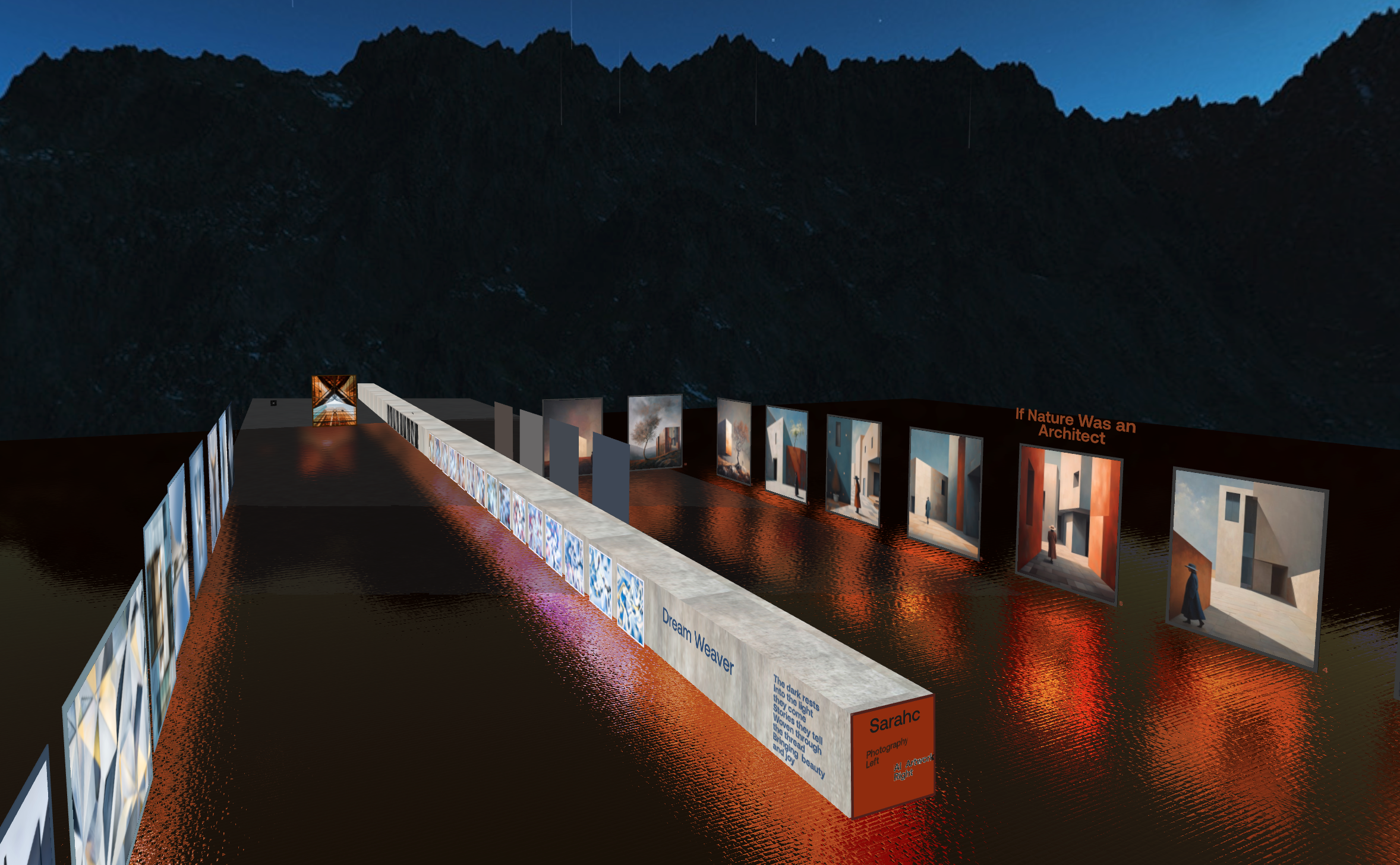
Sarah Caldwell, NZIPP Commercial Photographer of the Year 2019, former Air New Zealand pilot. Lens-based photography blended with generative AI, transforming physical structures into surrealist new forms. Architecture as virtual travel.
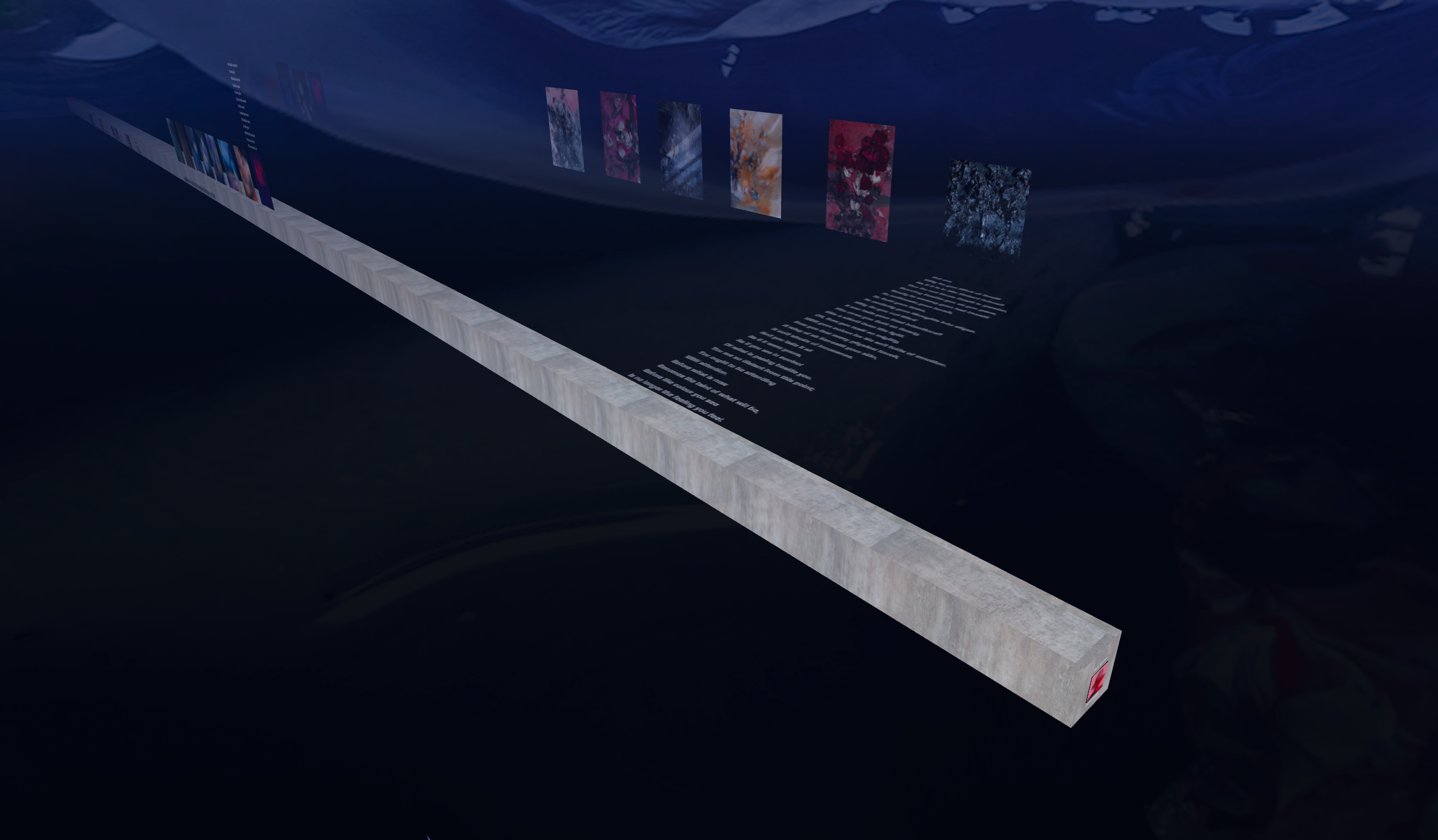
Surreal, dreamlike visual artist whose painting practice explores the edges of consciousness and colour. Work inscribed on-chain for permanence and legacy.
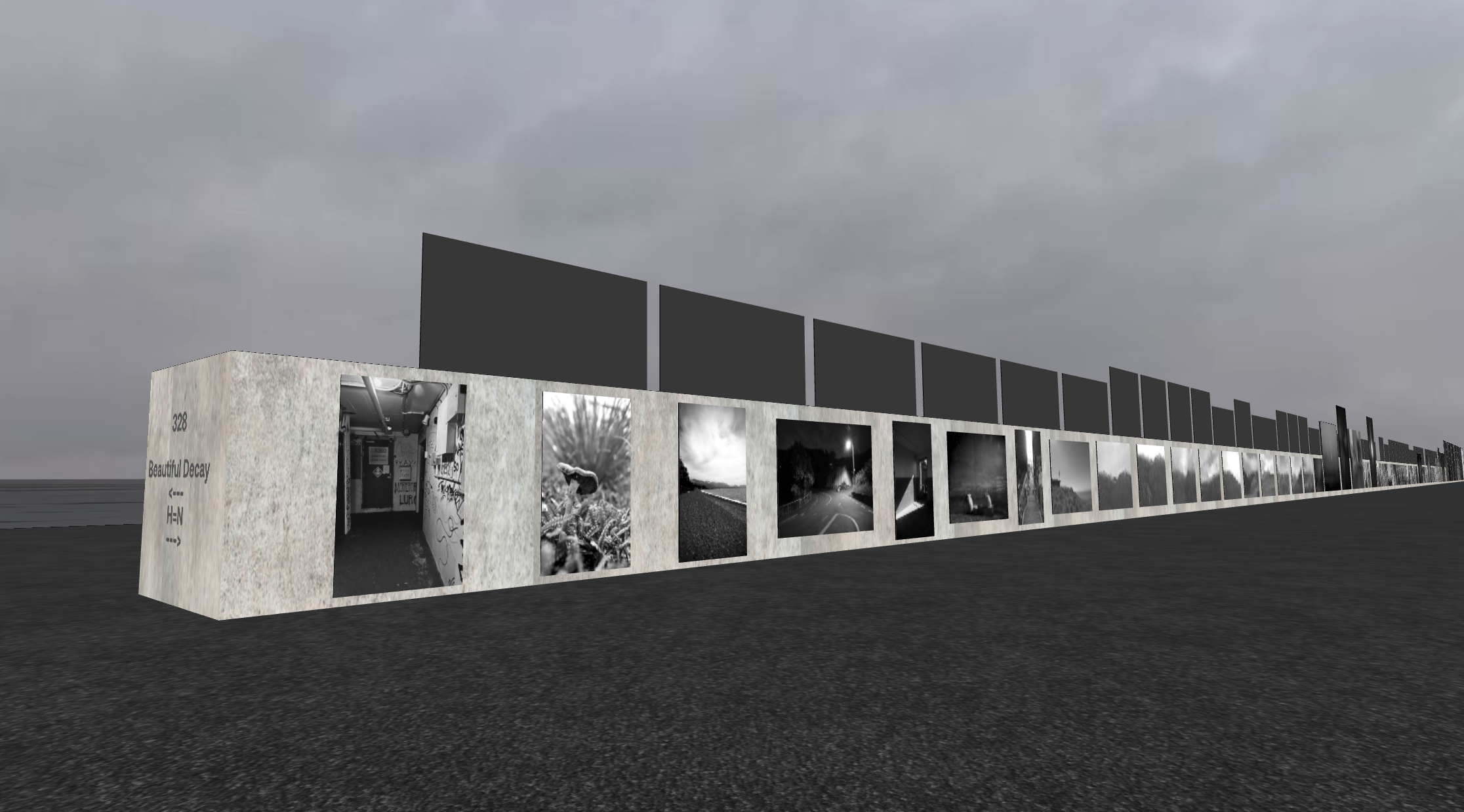
Jesse, lens-based artist whose confrontational black and white photography has shown at Superchief Gallery LA, Shibuya Square Tokyo, NFT New Zealand and the Peninsula Art Auction. Grainy fragmented visions of monochromatic chaos that linger.
Generative artists, photographers, painters, AI collaborators and lens-based storytellers from 82 countries. Browse the full archive at theline.wtf ↗
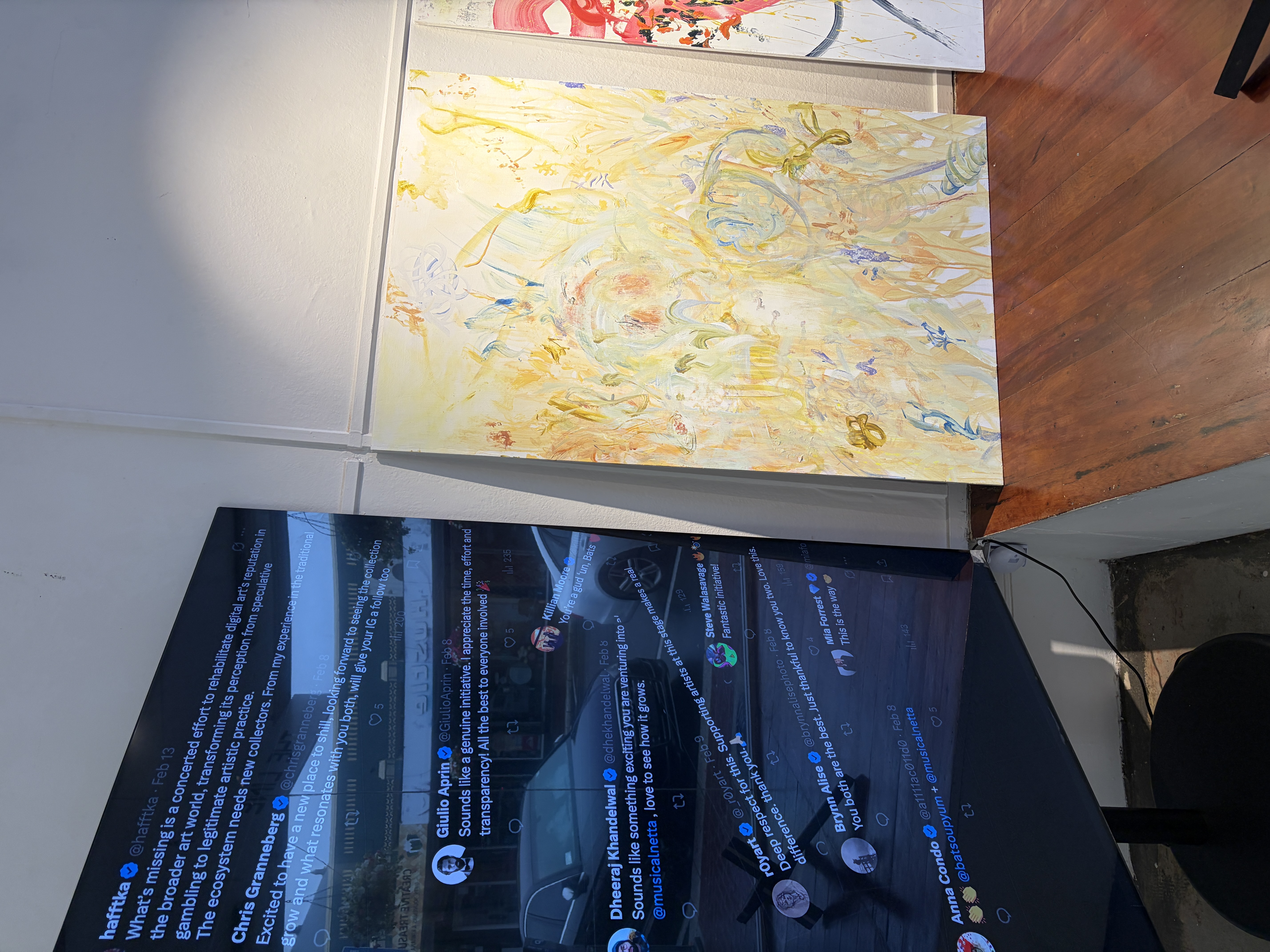
Artist screen · Newly installed 12 April 2026 · The Southern Node
Walk out of The Line's Southern Node and turn left. The block comes alive. Music. Movement. Art. Three businesses. Three corners of one block. The Westies editorial calls it the cultural triangle of 300 West, and the name has stuck because it earned itself.
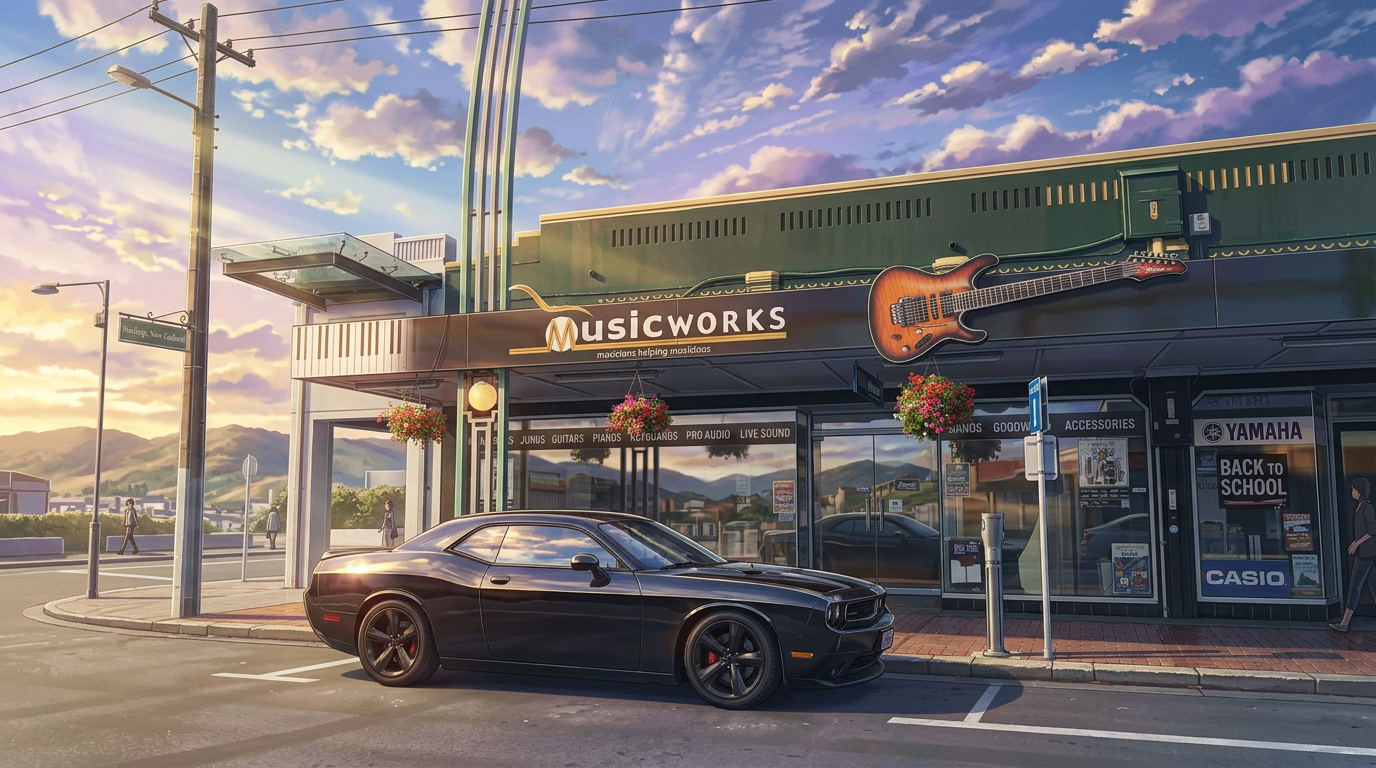
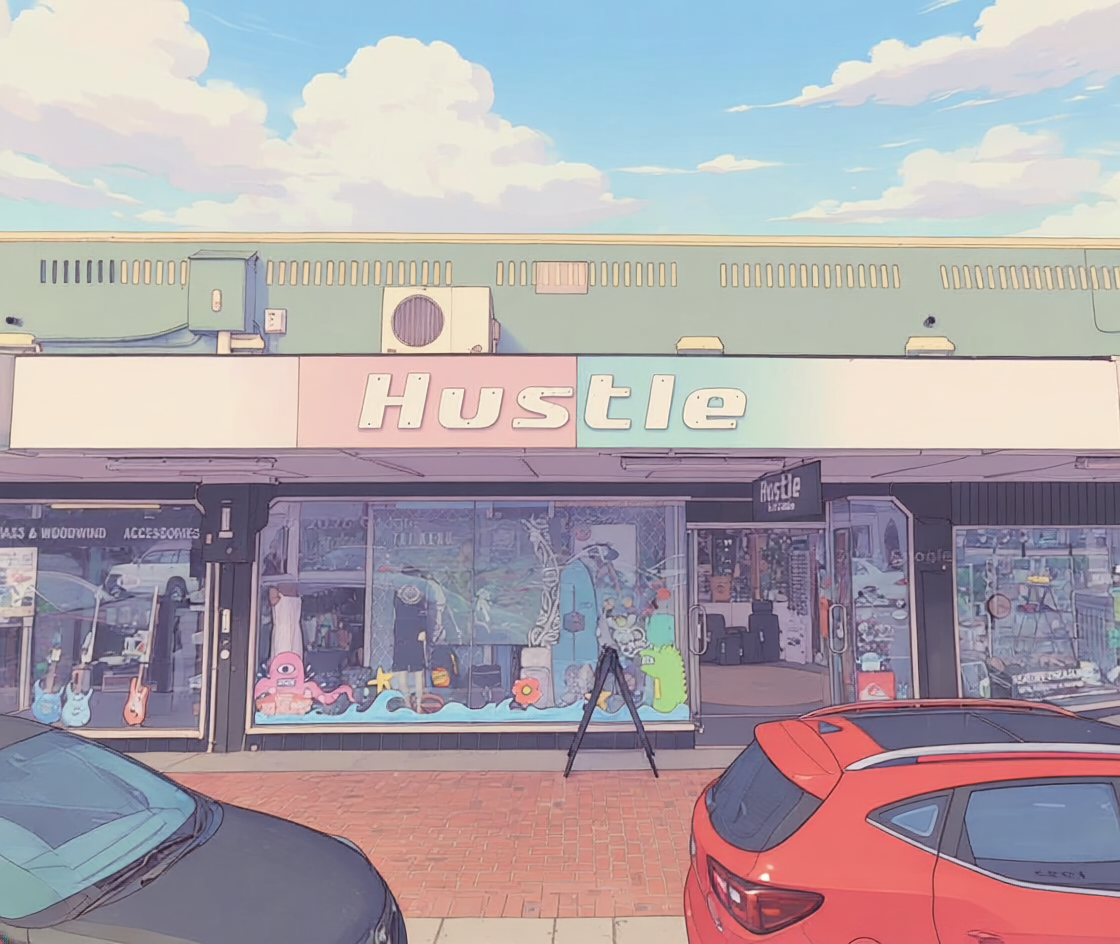
Music Works · Hustle Surf & Moto · 300 West
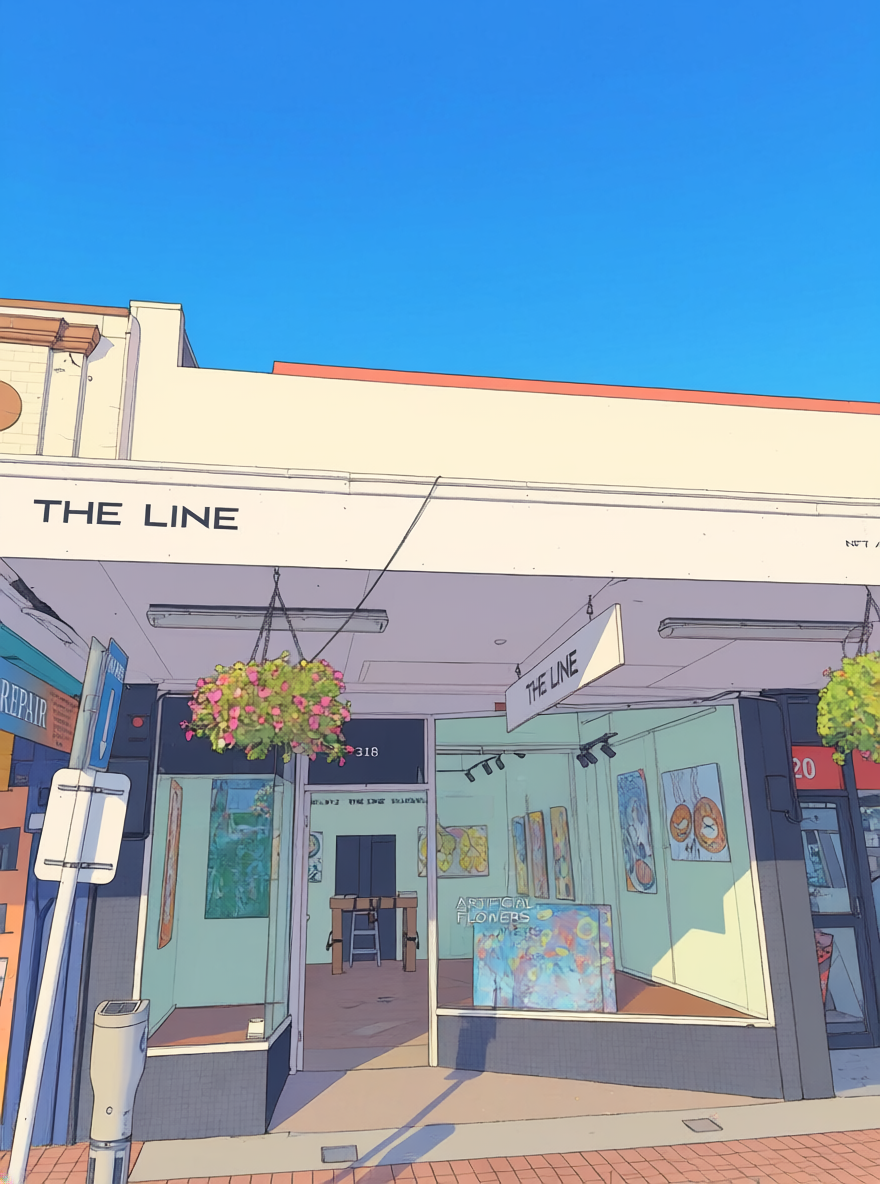
The Southern Node of a global digital art network. 792 artists, 82 countries, 899 positions on-chain. Free entry, Wednesday to Sunday.
Instruments, gear, lessons, and the particular energy of a place where actual musicians hang out. The sound end of the triangle... next door to where the archive lives.
A surf and motorcycle shop in inland Hastings, thriving because Hawke's Bay has always had a coast-facing identity. Waimārama and Ocean Beach pulling the swells, Hustle pulling the crowd.
300 West is the block where WestSide stops being a city strip and starts being a neighbourhood. A surf shop on one side. A music shop on the other. The Southern Node of a global art network in the middle. Together they make a kind of sense that the rest of the country will eventually catch up to.
And the block keeps filling in. Two doors along at 320C, Prototype is a graduate fashion store renting twelve racks to designers fresh out of art school... the same argument as the Southern Node, made in cloth instead of paint.
Every Thursday in May, the laneway behind The Line's Southern Node goes quiet for ten minutes... then a band sets up. Ages 16 to 18. Power provided. No script. No safety net. The laneway becomes a stage. The street becomes an audience. Backed by all three corners of the triangle, because the kids playing in the laneway are the ones who will outlive every business currently on this strip by decades. WAMJam is WestSide betting on them early.
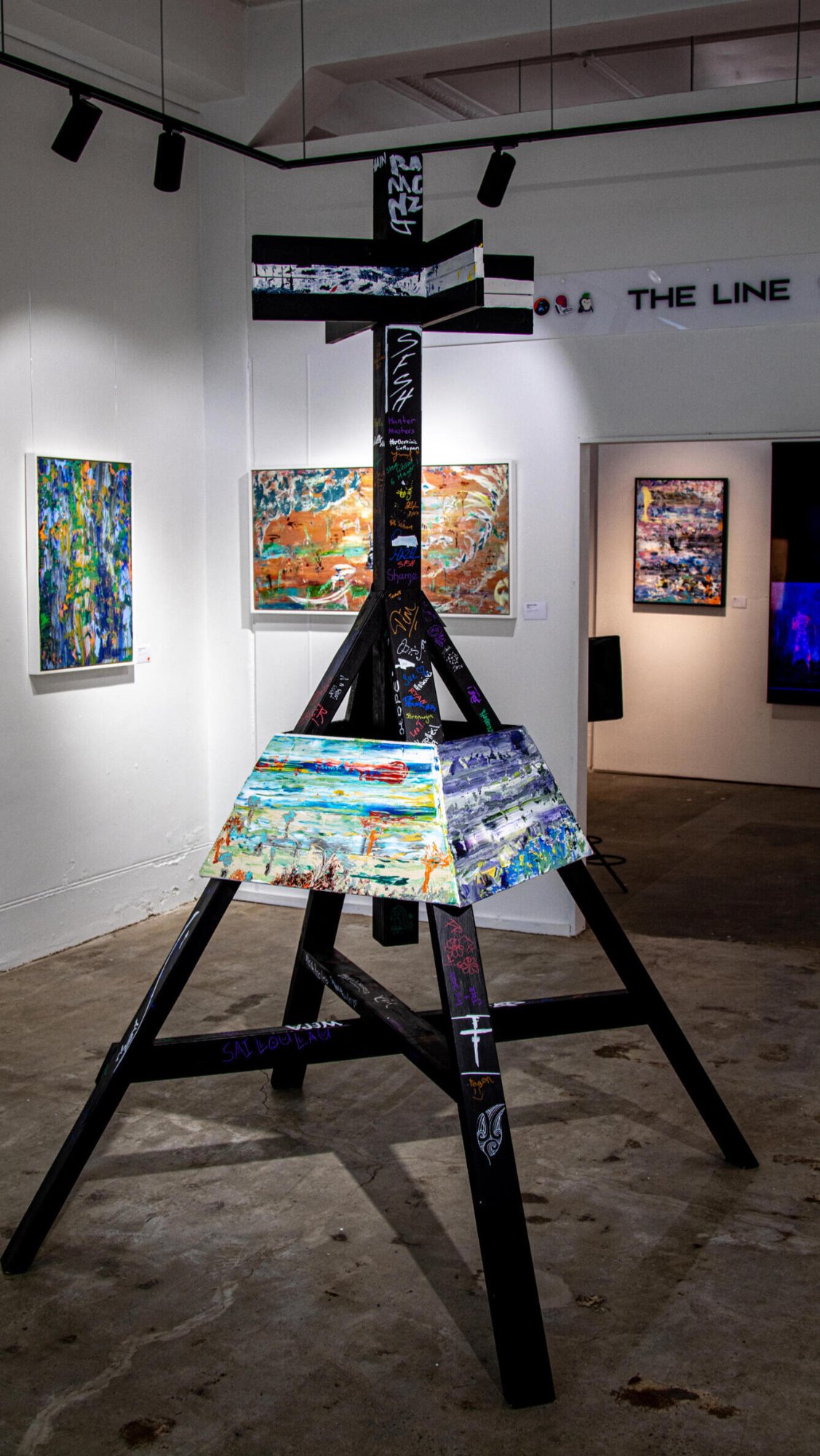
Geodetic Home · 300 West · Hastings
Out the front of 300 West sits a sculpture. It is a trig station... the kind of marker you usually find at the summit of a maunga, bolted to a rocky high point, used for over a century by mapmakers and trampers as a way of saying you are exactly here. Geodetic Home built this one and placed it at street level. Not on a peak. On the footpath. An invitation to stop, to kōrero, and to leave your own mark.
Visitors made marks directly on the surface... signatures, drawings, names accumulated over weeks. The structure invited people to pause around it the way one pauses at a New Zealand summit marker, and reminded us how to speak in person again.
"There is something quietly subversive about putting a summit marker on a city footpath. A summit is a destination. You climb to reach one. Putting a trig at street level is saying that this place is also a destination. You don't need to climb anything to arrive."
That is what art does when it leaves the gallery walls. In a time where algorithms divide, the Geodetic sculpture brought people together on a single surface. You are already here.
There is a pattern that older cities have repeated for decades. Artists move into the wrong end of town because the rent is cheap. Their presence changes the texture of the place. Coffee shops follow. Then bars and restaurants and apartments. Eventually the postcode becomes desirable, and the artists who started it can't afford to stay.
The pattern is well documented. It is also what is happening on the western end of Heretaunga Street right now... at a much smaller scale, on a much faster timeline, with the artists arriving from 82 countries instead of the next suburb across.
The Southern Node IRL is the artist-arrival event. WestSide is the wrong end of town that turns out to be the right end of town.
For Hastings, this is bigger than a gallery. The city has had decades of being the practical sibling to Napier... the working town across the bay, the place where the tradies live and the apples get packed. Beautiful in its own right, but rarely framed as a cultural destination by anyone outside it. The Line is one of the first projects in a generation to put a globally relevant cultural institution into the city without asking the city to apologise for being itself.
WestSide doesn't need permission from Auckland to be a destination. The Line didn't need permission from Christie's or Sotheby's to organise the largest ordered archive of digital art history. Both are operating outside the systems that used to decide what counted, and both are working.
The Line's Southern Node is on Heretaunga Street West, Hastings. Wednesday to Sunday, 10am to 6pm. Free entry. No booking. Walk in.
Collector evenings and private events by arrangement. The Southern Node is open Wednesday to Sunday. The block is open every day.
"The Line started as a thousand positions in the cloud. No walls. No postcode. No permission needed. Most regional galleries borrow from somewhere else. The Line is the somewhere else."
100 positions remain. After that, the archive closes forever. The blockchain is forever, and so is the order. The street has always been here. Now it has a global art network's Southern Node on it.